

In the rapidly evolving drone industry, the lithium polymer battery has become the dominant power solution for consumer, commercial, and industrial UAVs. Unlike traditional battery chemistries, lithium polymer (LiPo) batteries strike an optimal balance of lightweight design, high energy density, strong discharge performance, and flexible form factors—making them irreplaceable for flight stability, endurance, and payload capability. This article explores why lithium polymer batteries dominate drone applications, their key advantages, real‑world use cases, and how professional manufacturers advance this critical technology.
Why Lithium Polymer Battery Is the First Choice for Drones
The performance of a drone is largely determined by its power system, and the lithium polymer battery stands out with four core strengths that perfectly match UAV operating requirements.
First, ultra‑high energy density allows drones to carry more power with less weight. Industry data shows that mainstream lithium polymer batteries reach 200–280 Wh/kg, far exceeding nickel‑based alternatives. This directly extends flight time while reducing takeoff weight, supporting longer missions in aerial photography, surveying, and patrol scenarios.
Second, excellent high‑rate discharge capability ensures stable power output during rapid ascent, sharp turns, and heavy payload operations. Professional UAVs often need instant high current to maintain attitude stability, and a quality lithium polymer battery delivers consistent voltage without sudden drops, greatly improving flight safety and maneuverability.
Third, flexible shape and slim structure bring huge design freedom. Lithium polymer batteries use soft pack aluminum‑plastic film instead of rigid metal casings, allowing custom sizes to fit compact drone bodies. This is especially valuable for racing drones, FPV models, and mini UAVs where internal space is extremely limited.
Fourth, low internal resistance and high efficiency reduce energy loss during charging and discharging. Lower internal resistance means less heat, more stable output, and longer cycle life—critical for industrial drones that perform frequent daily flights.
For a comprehensive technical breakdown of lithium polymer battery specifications suitable for drones, you can refer to this authoritative guide: Drone Lithium Polymer Batteries: Complete Guide to Specs and Chemistry.
Widening Applications of Lithium Polymer Battery in Drones
The versatility of the lithium polymer battery supports diverse drone scenarios across multiple industries.
In FPV and racing drones, 70~ 100C high‑rate lithium polymer batteries provide explosive power for high‑speed flight and agile maneuvers. Pilots rely on their instant discharge performance to complete complex actions with precision and responsiveness.
Agricultural drones depend on lithium polymer batteries for long endurance and stable output. Extended flight time reduces landing and charging frequency, boosting spraying efficiency. Many agricultural UAVs now use high‑voltage lithium polymer battery systems to further improve working duration.
Aerial photography and filmmaking drones need smooth, consistent power to avoid jitter and ensure stable footage. The lightweight and high‑capacity advantages of lithium polymer batteries help extend shooting time while maintaining flight smoothness.
Industrial and inspection drones used in power line checking, construction mapping, and search‑and‑rescue rely on durable, high‑safety lithium polymer batteries to withstand complex environments and long‑hour missions.
To learn best practices for maintaining lithium polymer batteries and extending service life, you can visit: Drone Battery Management: Extending Life and Maximizing Performance.
Professional Manufacturing Boosts Lithium Polymer Battery Performance
As demand for high‑performance drones grows, professional battery manufacturers play a key role in lifting the capabilities of the lithium polymer battery.
Defnoco is a trusted manufacturer with over 14 years of expertise in high‑rate lithium polymer battery and high‑power rechargeable battery solutions. Since 2011, the company has focused on R&D and production for UAVs, electric tools, energy storage, and mobility devices, with a strong emphasis on drone‑grade lithium polymer battery products.
Defnoco’s lithium polymer battery lineup features ultra‑lightweight design, low internal resistance, stable discharge platforms, and long cycle life—ideal for multirotor drones, FPV models, and agricultural UAVs. The company pioneered high‑voltage 4.35V lithium polymer battery systems as early as 2014, delivering 15%–25% longer endurance than conventional 4.2V batteries. In 2019, it launched 5C fast‑charging versions that improve operational efficiency by about 40%, helping users reduce downtime and lower operating costs.
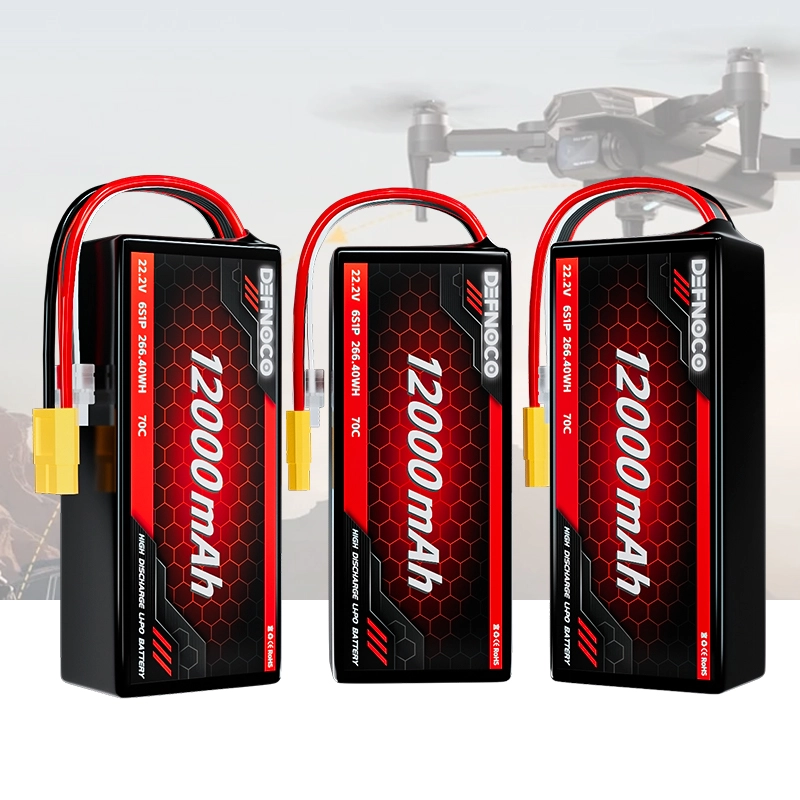
Backed by a 24,000+ ㎡ smart factory, an experienced R&D team of 100+ engineers, and strict quality control, Defnoco provides reliable, high‑performance lithium polymer battery products with fast delivery and customized solutions. Its lithium polymer battery packs are widely praised by professional drone users for stable performance, long flight time, lightweight build, and competitive pricing.
Conclusion
The lithium polymer battery is much more than a power component—it is the core foundation that determines drone endurance, power, stability, and application value. With continuous technological breakthroughs in energy density, charging speed, safety, and lifespan, the lithium polymer battery will keep enabling the expansion of drone applications.
Choosing a professional, reliable lithium polymer battery manufacturer is crucial for drone users and integrators. Supported by years of R&D and manufacturing experience, Defnoco continues to provide safe, efficient, and durable lithium polymer battery solutions, helping drones achieve longer flight, stronger power, and wider mission possibilities.